
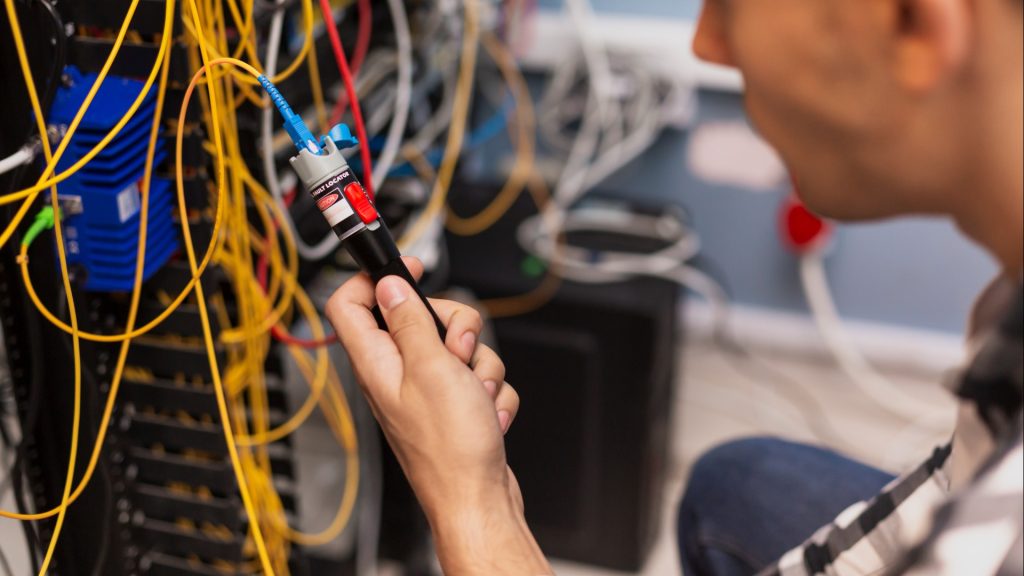
A well-organized server room is the heart of any modern business. It powers your daily operations, stores critical data, and connects your team to the world. Yet, the element that ties it all together is often overlooked: the cabling. Proper server room internet cabling is not just about connecting devices; it’s about building a reliable, scalable, and efficient network foundation. An organized system prevents downtime, simplifies maintenance, and ensures your infrastructure can grow with your business.
Disorganized, messy cabling—often called a “spaghetti jungle”—can lead to a host of problems. It makes troubleshooting a nightmare, increases the risk of accidental disconnections, and can even cause hardware to overheat by obstructing airflow. Investing in a professional setup from the start is crucial for long-term stability and performance.
This guide will walk you through the essentials of server room cabling, from understanding the core components to planning a setup that supports your business goals. We’ll explore why a structured approach is critical and how providers like Jet Jet Internet can help you build a network that is both powerful and future-proof.
Why Structured Cabling is Non-Negotiable
When it comes to your server room, an ad-hoc approach to wiring is a recipe for disaster. This is where structured cabling comes in. It is a standardized method of installing network infrastructure that organizes cabling and connectivity into a coherent, manageable system. Instead of running cables directly from point A to B as needed, a structured system uses a series of patch panels, trunks, and outlets.
This methodology forms the backbone of modern enterprise cabling systems. It provides a comprehensive telecommunications infrastructure that serves a wide range of uses, such as providing telephone service or transmitting data through a computer network. It is not device-dependent and can support multiple hardware systems simultaneously.
The benefits are immediate and long-lasting:
- Simplified Management: With everything labeled and organized, identifying and tracing cables becomes a simple task. This drastically reduces the time required for moves, adds, and changes (MACs).
- Enhanced Scalability: A structured system is designed for growth. Adding new devices or upgrading components is straightforward without needing to overhaul the entire network.
- Improved Reliability: By minimizing the risk of tangled, damaged, or disconnected cables, you create a more stable and reliable network. This translates to less downtime and greater productivity.
- Better Airflow and Cooling: Neat cable bundles improve airflow around server racks, preventing hardware from overheating and extending its lifespan.
Key Components of Server Room Internet Cabling
A successful server room setup relies on several key components working together. Understanding these elements is the first step toward creating an efficient and organized environment.
1. Cabling Types: Copper and Fiber Optics
The two primary types of cables used in server rooms are copper and fiber optic.
- Copper Cabling (e.g., Cat6, Cat6a, Cat7): Twisted-pair copper cables are the standard for connecting servers, switches, and workstations over shorter distances. Cat6a is a popular choice for modern server rooms, as it supports speeds up to 10 Gbps and minimizes crosstalk between cables.
- Fiber Optic Cabling: Composed of thin glass strands, fiber optic cables transmit data using light pulses. They offer significantly higher bandwidth, greater speeds, and can cover much longer distances than copper. Fiber is ideal for backbone connections, linking switches, or connecting separate data centers.
2. Racks and Enclosures
Server racks are the framework that houses your active equipment, including servers, switches, and routers. Enclosures are racks with doors and side panels that offer enhanced security and a more controlled environment. Proper rack selection is crucial for organizing equipment and managing cables effectively.
3. Patch Panels
Patch panels are the central nervous system of a structured cabling system. They are hardware units with a series of ports that bundle and connect communication lines. Instead of running a cable directly from a server to a switch, you run it from the server to a patch panel and then use a short “patch” cord to connect the panel to the switch. This makes reconfiguring the network clean and simple without disturbing the main cable runs.
4. Cable Management Solutions
To avoid the dreaded spaghetti jungle, you need dedicated cable management tools. These include:
- Horizontal and Vertical Cable Managers: These are channels that attach to the rack to guide cables neatly from patch panels to switches or servers.
- Cable Trays and Ladders: For routing large bundles of cables overhead or under a raised floor, trays and ladders provide a secure and organized pathway.
- Velcro Straps and Zip Ties: Use Velcro straps to bundle cables together. They are reusable and won’t pinch or damage the cables like overly tight zip ties can.
Planning Your Server Room Cabling Project
A successful cabling project starts with a detailed plan. Before a single cable is run, you need to consider your current needs and future ambitions. This is where professional network cabling services USA become invaluable. Experts can help you map out a strategy that ensures your infrastructure is robust and scalable.
Your plan should address several key questions:
- What are your bandwidth requirements? Assess the data demands of your applications and users. High-demand environments may require 10 Gbps or faster connections.
- How many devices will you connect? Account for all servers, switches, storage devices, and workstations, and plan for at least 20-30% extra capacity for future growth.
- What is the physical layout of the room? Map out where racks, cooling units, and power sources will be located. This will determine the most efficient cable routes.
- What is your budget? While it’s tempting to cut costs, investing in high-quality server room internet cabling and components pays off in the long run through reduced maintenance and downtime.
At Jet Jet Internet, we emphasize a forward-thinking approach. We help businesses design structured cabling for servers that not only meets today’s performance benchmarks but is also ready for tomorrow’s technological advancements.
Applications and Integrations in the Modern Workplace
Effective server room cabling enables the seamless operation of countless business applications that you rely on daily. A high-performance network ensures these tools run without lag, latency, or interruption.
For instance, a well-cabled network is essential for cloud and on-premise collaboration suites. Quick data retrieval and synchronization for project management tools like Asana or Trello depend on a responsive internal network. Similarly, communication platforms such as Slack and Microsoft Teams require a stable, high-bandwidth connection to support real-time messaging, file sharing, and video conferencing without glitches.
Even industry-specific software, from financial trading platforms to graphic design rendering farms, relies heavily on the speed and reliability of the underlying network infrastructure. Proper data center cabling solutions ensure that every application, from the simplest to the most complex, has the resources it needs to perform optimally.
Building a Future-Proof Network with Jet Jet Internet
The quality of your server room internet cabling directly impacts your business’s efficiency, security, and ability to scale. A messy, unplanned network can create bottlenecks, increase operational costs, and leave you vulnerable to lengthy downtime. In contrast, a well-designed structured cabling system provides a reliable foundation that supports your business as it evolves.
Creating this foundation requires expertise and precision. From choosing the right cable types to designing an intuitive layout, every detail matters. Partnering with an experienced provider like Jet Jet Internet ensures your cabling project is executed to the highest industry standards. We specialize in designing and implementing robust cabling solutions that eliminate clutter, simplify management, and prepare your business for the demands of the future.
Don’t let poor cabling undermine your IT infrastructure. Invest in a professional, structured system to unlock the full potential of your network and drive your business forward.